
Replacing a Conservatory with a Modern Extension in Trinity, Edinburgh

Many houses in Edinburgh have conservatories added in the 1990s and early 2000s. While they can look attractive initially, they often become one of the least comfortable rooms in the house.
They tend to overheat in summer and feel too cold in winter, meaning they are rarely used for much of the year.
This project in Trinity, Edinburgh involved replacing an existing glazed conservatory with a fully insulated rear extension that can be used comfortably all year round. By retaining key parts of the original structure while rebuilding the upper section, we were able to improve energy performance dramatically while keeping the footprint and foundations of the original extension.

The Existing Conservatory
The original structure was a single-storey lean-to conservatory attached to the rear of the house.
It consisted of:
Painted rendered masonry base walls
White UPVC glazing and doors
A fully glazed roof
A simple lean-to form against the rear wall of the house
Like many conservatories, it created a visual connection to the garden, but it was difficult to use comfortably. The large areas of glazing meant the space lost heat quickly in winter and overheated during sunny periods.
Although the conservatory had limitations, the existing footprint, foundations and ground-bearing slab were in good condition, which created an opportunity to reuse parts of the structure rather than demolish everything.

Replacing the Conservatory with a Proper Extension
The new proposal replaces the lightweight glazed structure with a fully insulated extension, while keeping the same overall footprint
Key elements of the new design include:
Retaining the existing masonry base course, slab and foundations
Rebuilding the upper structure to modern energy standards
Introducing high performance triple-glazed windows and doors
Cladding the extension in light grey fibre cement boards
A slate grey single-ply roof membrane
A coloured sliding door leaf providing access to the garden
The roof lifts dramatically towards the garden end of the extension, allowing evening sunlight to reach deeper into the dining and living areas.

Designing the Internal Spaces
One of the key design challenges was maintaining good light levels within the existing kitchen while improving the quality of the adjacent dining and social spaces.
The extension effectively contains three connected zones:
1. Kitchen connection. A large rooflight is positioned near the junction with the existing kitchen to ensure the original room continues to receive good daylight.
2. Dining area. Large glazed sliding doors open directly to the garden, with additional roof glazing above to create a bright dining space.
3. Snug / social area. Towards the end of the extension the ceiling rises slightly, creating a more intimate space suitable for seating, a TV or potentially a small stove. A high-level clerestory window captures evening sun while maintaining privacy.
Together these elements create a series of connected but distinct spaces, making the extension far more versatile than the original conservatory.
Improving Energy Performance
A major objective of the project was to create a space that could be comfortably used all year round.
Because the original building warrant drawings were available, we were able to compare the energy performance of the existing conservatory with the proposed extension.
The results were significant.
Through improved insulation, high-performance glazing and a fully insulated roof structure, the heat loss value was reduced from 105 down to 27, a four fold reduction in energy loss.
This represents a substantial improvement in thermal performance and ensures the new extension will feel comfortable in both winter and summer.

Reusing the Existing Structure
An important aspect of the project was retaining as much of the existing construction as possible.
By keeping the slab, foundations and lower masonry walls we were able to:
Reduce demolition waste
Lower construction costs
Minimise disruption during the build
Speed up the overall construction programme
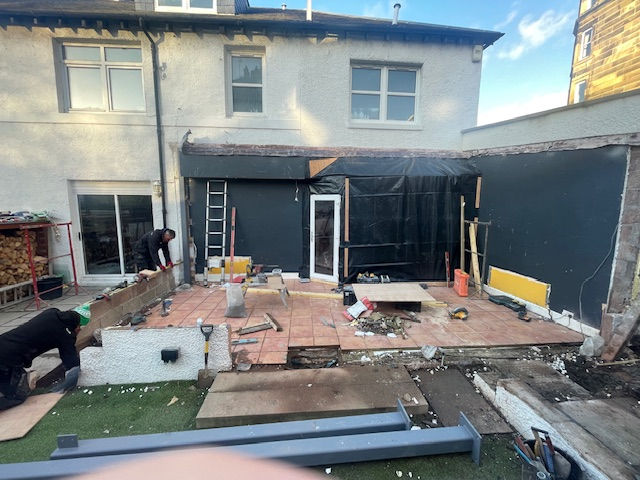
The new structure is currently on site and wind- and water-tight, with the new cladding and glazing now defining the character of the extension.

From Conservatory to Usable Living Space
Replacing an underperforming conservatory with a well-designed extension can dramatically improve how a house works.
For this home in Trinity, Edinburgh, the project transforms a space that was uncomfortable for much of the year into a fully insulated kitchen, dining and social extension that connects the house to the garden.
By carefully retaining parts of the original structure while upgrading the building envelope, the project achieves better energy efficiency, improved daylight and a much more flexible living space.
The project is currently on site and wind- and water-tight. We’ll share completed photographs once construction is finished.
If you are considering replacing a conservatory with a modern extension in Edinburgh, thoughtful design and careful energy planning can make a significant difference to both comfort and long-term performance.


Comments